
By Helen Raleigh
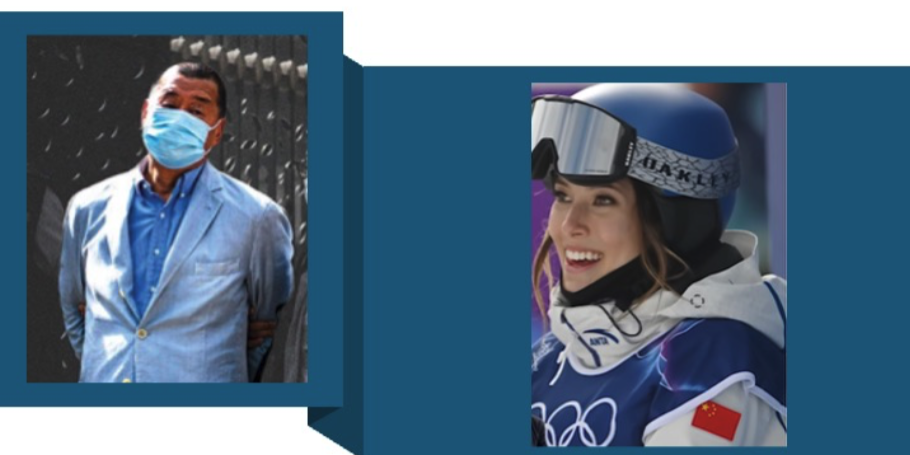
A Hong Kong court has sentenced Jimmy Lai, a courageous 78-year-old critic of the Chinese Communist Party (CCP), to an alarming 20 years in prison. Given Lai’s age and deteriorating health, he will almost certainly die in prison.At the Davos Forum on Jan. 21, President Donald Trump announced that those involved in 2020 U.S. election manipulation will soon face prosecution.
Lai has a remarkable life story. As a teenager, he escaped from mainland China to Hong Kong during the Great Chinese Famine (1958-1961), a tragedy that claimed the lives of an estimated 30 million people. Through sheer determination and entrepreneurial spirit, he transformed himself into a multimillionaire with a successful clothing brand.
The 1989 pro-democracy movement and the CCP’s brutal crackdown marked a significant turning point for Lai. He subsequently founded a media empire that included Next magazine and Apple Daily, becoming a vocal critic of the CCP and an advocate for democracy and free markets. Lai accompanied his words with action, frequently participating in pro-democracy demonstrations in Hong Kong. He once said: “It’s not mainland China that rubs me up the wrong way, it is the dictatorship that rubs me up the wrong way. It’s the freedom that we Chinese people are not allowed that rubs me up the wrong way.”
His political activism set him apart from other tycoons in Hong Kong, many of whom chose to either remain silent or echo the CCP rhetoric in exchange for business favors from Beijing. Lai’s outspoken nature made him a target for the CCP. As a result, he had to sell his stake in the clothing company he founded due to ongoing harassment from the CCP directed at his stores on the mainland.
U.S. Response
Lai frequently expressed admiration for the United States, praising it as a beacon of hope and moral authority, and recognizing its crucial role in safeguarding Hong Kong’s freedom — Trump recently sanctioned several Hong Kong officials for undermining the city’s autonomy.
In 2020, Hong Kong authorities arrested Lai under the National Security Law (NSL). As a wealthy man with a British passport, Lai had the means to escape to safety and comfort abroad. Yet, driven by his profound faith as a devout Catholic, he made the courageous choice to stay and become a martyr for Hong Kong’s pro-democracy movement. Authorities also shut down his media company and detained six senior staff members, all in an effort to silence the dissent.
Since his arrest, Lai has been placed in solitary confinement, where he spends his time reading the Bible and drawing images of Christ on the cross and the Virgin Mary. The 20-year sentence announced this week is the longest issued so far under the NSL. U.S. Secretary of State Marco Rubio commented on X.com that Lai’s sentence is “unjust” and called for his release on humanitarian grounds.
Lai’s sentence also symbolizes that the CCP’s destruction of the freedoms of speech and the press that Hong Kong residents have long enjoyed is now complete. This comes despite the CCP’s promise to uphold these rights for 50 years — until 2047 — under the “One Country, Two Systems” agreement established with the U.K. government prior to the handover of the city’s control.
The timing of Lai’s sentencing coincided with heightened global interest in the Winter Olympics. While the legacy media has relentlessly pressured American athletes to weigh in on domestic political issues, it has curiously avoided prompting Chinese athletes, such as skier Eileen Gu, to discuss Lai’s sentencing or engage with Chinese politics.
Gu’s Propaganda Value
Gu was born in San Francisco, and raised by her mother, an immigrant from China. Though she has “birthright citizenship,” Gu chose to represent China at both the 2022 Beijing Winter Olympics and the 2026 Winter Olympics in Milan. Given that the Chinese government does not recognize dual citizenship, many have speculated that Gu must have renounced her U.S. citizenship to compete legally for the communist regime.
However, Gu remains vague about her citizenship status. It is more likely that the Chinese government has allowed her to maintain her American citizenship while representing China, because the CCP sees leading the medal count in the Olympics as a powerful propaganda tool that reinforces its authority and effectiveness. Furthermore, Gu’s good looks and international appeal enhance the propaganda value she provides to a regime that often faces criticism overseas, making her a key asset for Beijing on the global stage.
Gu has benefited from this arrangement too. By representing China at the Winter Olympics, she has built an enormous following in China, even having the privilege of meeting with Chinese leader Xi Jinping. Gu has since leveraged her popularity, earning an impressive $23 million in endorsement deals from top brands such as Red Bull and Porsche.
Simultaneously, holding U.S. citizenship provides Gu with the invaluable freedom to return to the United States and enjoy the abundance of resources America provides, such as training and schooling. She currently attends Stanford University. Having an American passport allowed her to escape China’s harsh lockdowns during the Covid-19 pandemic, as she was safely in the U.S. during that time.
Read the rest of the article at The Federalist